How the Historical Struggle for Public Restrooms Changed Women's Mobility
A historical overview shows how the lack of accessible toilets limited women's movement in cities and the role department stores played in solving this issue.
 👥Society
Photo: TSN
Key points
- The restriction of women's movement due to a lack of toilets was known as the 'urinary leash'.
- In 1907, department stores pioneered comfortable women's restrooms for commercial gain.
- Improved sanitation infrastructure helped women participate more actively in public life.
For centuries, women's freedom of movement in urban spaces was severely restricted by a lack of basic facilities. Historians note that as late as the 19th century, women often lacked access to public restrooms due to social taboos and deliberate opposition from men. This phenomenon was termed the "urinary leash," as the distance a woman could travel from home was directly tied to the availability of a safe toilet.
The Commercial Driver of Change
The situation began to shift in the early 20th century thanks to major department stores. In 1907, Chicago's Marshall Field’s department store opened comfortable public restrooms for women, complete with nursing rooms. British entrepreneur Harry Selfridge adopted the concept in London, adding hot water and writing desks. Although driven primarily by commercial interests to keep shoppers outdoors longer and spending more money, these amenities had a profound social impact.
Broader Social Implications
The availability of safe public restrooms allowed women to spend more time away from home, aiding the suffrage movement and broader civic participation. Experts emphasize that access to basic sanitation remains a crucial public issue today, highlighting the link between urban infrastructure and personal freedom.
Source TSN — tsn.ua/other/zinkam-dovodylosia-terpity-hodynamy-iak-univermahy-zminyly… ↗
Read next
 🛡️Security
General Staff: Day 1733 of the war, 131 combat clashes recorded at the frontline
Over the past day, 131 combat clashes took place along the frontline. The enemy showed the highest activity in the Pokrovsk and Kostiantynivka sectors.
 🚌Transport
Belgium to Close Airspace Due to Nationwide Strike, Canceling Hundreds of Flights
On November 23, Belgium's airspace will be completely shut down for civil aviation due to an air traffic controllers' strike and nationwide austerity protests.
 🛡️Security
Russian vessel Sparta II keeps burning in Gulf of Finland following drone strike
A complex firefighting operation is underway in Finnish territorial waters aboard the Russian cargo ship Sparta II, which was struck by Ukrainian drones.
 🛡️Security
Senior Soldier Lubomyr Zvieriuk from neighboring Novyi Rozdil Kills in Action
Serviceman Lubomyr Zvieriuk, previously reported missing, has been confirmed dead following battles in the Donetsk region.
 🇺🇦Ukraine
Tragedy in Dymer: 14 People Missing After Russian Drone Strike on Residential Building
A Russian drone attack on the village of Dymer partially destroyed a five-story building, leaving 14 residents missing and several injured.
 🛡️Security
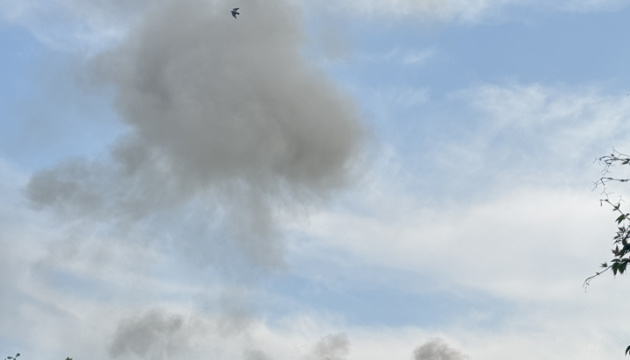
Energy infrastructure in Zhytomyr region hit four times in single day, authorities report
Russian forces launched four drone strikes against energy facilities in the Zhytomyr region over the past 24 hours.